Buying a home in Phoenix? How to check the HVAC system before closing
By Diego Ibrahim · Updated 2026-07-14
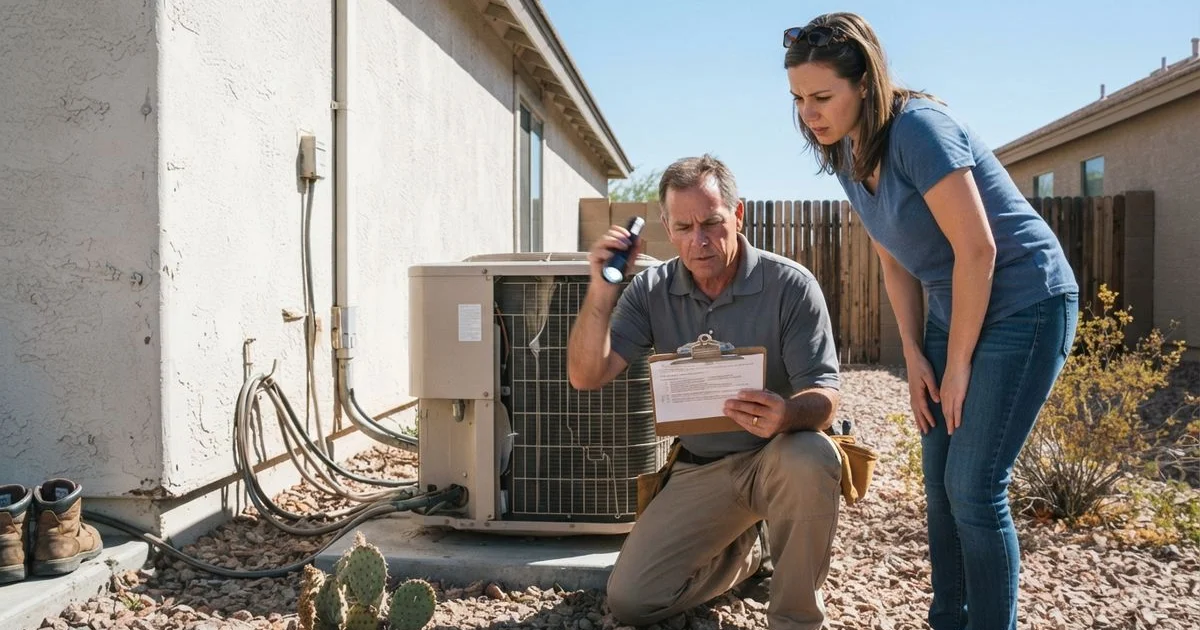
In most of the country, a home’s HVAC system is a minor line item in the inspection report. In Phoenix, it is close to a life-support system for the house, and a buyer who skips a real look at it can end up facing a multi-thousand-dollar surprise within the first year.
Why this matters more here
Phoenix AC systems run far more hours per year than equivalent systems in milder climates, which means they wear out faster and a well-maintained 12-year-old unit here has done more work than a poorly maintained 12-year-old unit somewhere cooler. A system’s age alone does not tell the whole story, but combined with maintenance history, it is one of the strongest signals of how much runway you actually have before a major repair or replacement.
What to check before you make an offer
Start by finding the system’s age from the model and serial number on the outdoor unit’s data plate, or ask the seller directly for the install date. Ask whether the seller has maintenance records; a system serviced twice a year consistently is a very different bet than one with no documented maintenance history. Check whether any major work (a compressor replacement, a full system swap) was permitted, unpermitted work can create problems at resale down the line and may signal corners were cut elsewhere too.
Getting a proper inspection
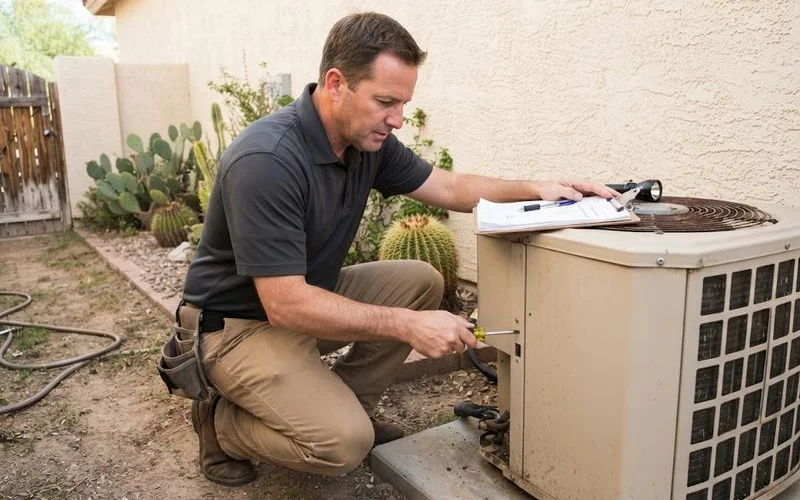
A standard general home inspection typically confirms that the system powers on and produces air at a reasonably different temperature than the room, which is a basic functional check, not a deep evaluation. For a system that is aging, has an unclear maintenance history, or where the general inspector flags any concern, a separate HVAC-specific inspection by a licensed contractor is worth the additional cost. This deeper check can include refrigerant level testing, an assessment of ductwork condition, and an honest opinion on remaining expected lifespan.
| Check | General home inspector | HVAC-specific inspection |
|---|---|---|
| System powers on and produces air | Yes | Yes |
| Refrigerant level check | Rarely | Yes |
| Ductwork condition assessment | Visual only | Detailed |
| Load sizing evaluation (is it the right size for the home) | No | Yes |
| Estimated remaining lifespan | General impression | Informed estimate |
Using what you find in negotiation
If an inspection turns up a system near the end of its life, undersized for the home’s square footage, or with a history of repeated repairs, you have real negotiating room. Common outcomes include asking the seller to complete a repair before closing, requesting a credit toward the cost of eventual replacement, or adjusting the offer price to account for the near-term expense you are inheriting. Sellers are often more receptive to a credit than an outright repair, since it avoids them managing a contractor on a timeline before closing.
Multiple systems, multiple ages
Larger Phoenix homes, especially two-story properties, often run two separate HVAC systems rather than one, sometimes installed years apart. Check the age of each unit independently rather than assuming a matching install date, since a seller replacing one system after a failure while leaving the original unit in place is common. A property with two systems at very different ages effectively gives you two separate replacement timelines to plan around, which is worth factoring into your overall budget for the home, not just your initial purchase price.
A quick pre-offer checklist
Before writing an offer on a Phoenix home, try to get: the system’s age and a rough sense of maintenance history, confirmation of whether major past work was permitted, and if anything looks questionable, a separate HVAC inspection scheduled within your due diligence period rather than relying on the general inspection alone. Once you’ve closed, our pre-summer AC checklist walks through the seasonal prep worth doing before the heat arrives.
Ask about the ductwork too
It is easy to focus entirely on the outdoor unit’s age and miss the ductwork question entirely, but leaky or poorly sealed ducts can undercut even a brand-new system’s performance and drive up cooling costs regardless of how good the equipment itself is. If the home has an attic, a quick look at duct condition, or a direct question to the seller about any past duct work, rounds out your picture of what you are actually inheriting.
Once you own the home, our directory lists local AC repair and installation contractors by review consistency and response history, and our ranking methodology explains exactly how those scores are calculated, useful whether you need an immediate repair or are just planning ahead for the system you inherited.
Common questions
- How much should I worry about AC age when buying a Phoenix home?
- Take it seriously. A unit past 10-12 years old in Phoenix has likely seen heavier use than the same age system elsewhere, and replacement can run several thousand dollars, worth factoring into your offer or negotiation.
- Does a standard home inspection cover the HVAC system thoroughly?
- A general inspector checks that the system turns on and produces reasonably cool or warm air, but usually does not perform a detailed refrigerant check, load calculation, or deep component inspection. For an older or questionable system, a separate HVAC-specific inspection is worth the extra cost.
- Can I ask the seller to fix or replace the AC before closing?
- Yes, this is a normal part of negotiation. If an inspection reveals a failing or significantly aging system, you can request a repair, a credit toward replacement, or a price adjustment as part of your offer terms.
- What documents should I ask for regarding the HVAC system?
- Ask for the system's age (from the model/serial number or install date), any warranty documentation, permit records for past installation or major repair work, and service or maintenance history if the seller has it.