Your AC breaks down in Phoenix: what to do first
By Diego Ibrahim · Updated 2026-05-11
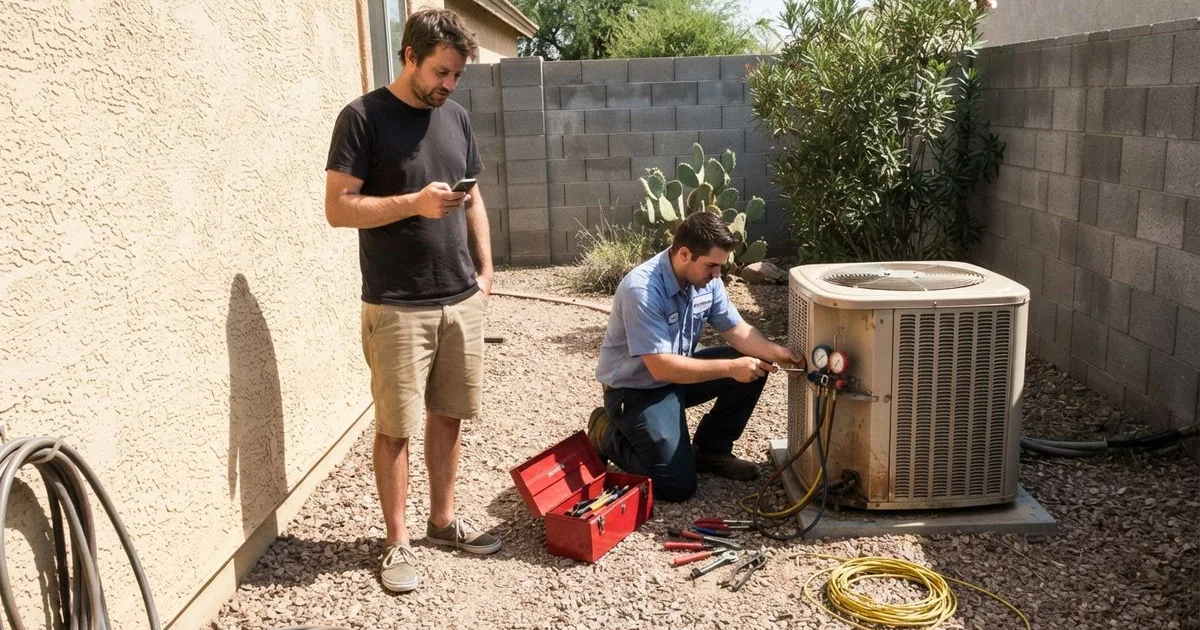
An AC failure in Phoenix moves fast from inconvenience to genuine problem. Having a clear sequence of steps ready, before it happens, saves time when it matters most.
First, rule out the easy fixes
A surprising number of “the AC is dead” calls trace back to something simple. Before assuming the worst, work through this checklist.
- Check the thermostat. Confirm it has power (replace batteries if it is battery-operated), is set to cool, and the target temperature is below the current room temperature.
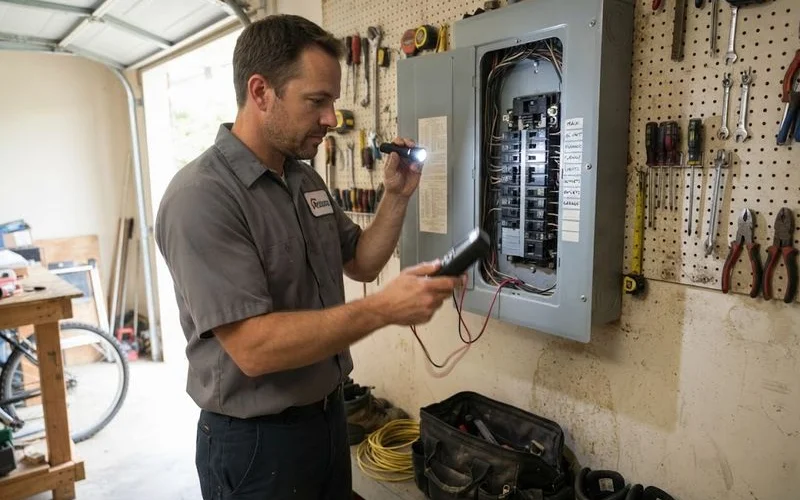
- Check the breaker panel. AC units draw significant power and are prone to tripping a breaker, especially older units or ones running hard in extreme heat. A tripped breaker is a quick, free fix.
- Look at the outdoor unit. Confirm the fan is spinning and there is no obvious debris, dead vegetation, or blockage restricting airflow around the condenser.
- Check the air filter. A severely clogged filter can restrict airflow enough to trigger a safety shutoff on some systems.
If none of these resolve it, you are dealing with a genuine repair need.
Deciding how urgent it is
Not every AC failure is a middle-of-the-night emergency, but some genuinely are. Use this as a rough guide.
| Situation | Urgency |
|---|---|
| Daytime, mild temperatures, no vulnerable household members | Standard scheduling is reasonable |
| Daytime, extreme heat (100°F+), infants/elderly/medical conditions present | Same-day service |
| Nighttime failure, any household composition, extreme heat | Emergency/after-hours service |
| Any failure with signs of electrical burning smell or sparking | Emergency, and consider shutting off power at the breaker |
Should you try a portable unit or fan first
If you own a portable AC unit or extra box fans, this is the moment to use them, focused on the room where vulnerable household members are staying rather than trying to cool the whole house. A portable unit vented through a window can bring a single room down several degrees within an hour, which buys real time while you wait for a technician. Do not run a generator or any fuel-burning equipment indoors or in an attached garage to power backup cooling, carbon monoxide risk is real and it is not worth trading one emergency for another.
Making the house livable in the meantime
While you wait for a technician, close blinds and curtains on any sun-facing windows to cut down on heat gain, and run ceiling fans or box fans to keep air moving, since moving air feels cooler even without active cooling. Skip the oven and stove for anything that needs cooking. Keep interior doors open so air circulates evenly, and if the house is large, consider consolidating the household into one cooler, shaded room rather than trying to keep the whole home comfortable. Stay hydrated with water, and watch for signs of heat-related illness in anyone especially vulnerable to the heat, including infants, older adults, and pets.
If the outage affects the whole neighborhood
Sometimes an AC failure is not your system at all, it is a power outage affecting a wider area, common during monsoon storms. Check whether neighbors have power before assuming your unit failed; if it is a grid issue, the fix is contacting your utility provider rather than an HVAC contractor, and the same heat-safety steps below still apply while you wait for power to return.
What to tell the contractor when you call
Having a few details ready speeds up both the phone call and the diagnosis: your system’s approximate age, whether the outdoor fan is running or completely silent, whether you have already checked the breaker and thermostat, and how long the system has been down. If the household includes an infant, someone elderly, or anyone with a health condition affected by heat, say so. Many contractors prioritize dispatch for vulnerable households during extreme heat.
After the fix
Once the system is running again, ask the technician what caused the failure and whether it points to a bigger issue worth addressing before the next heat wave. A breakdown that stemmed from a single failed capacitor is a quick fix; one that traces back to an aging compressor or years of skipped maintenance is worth planning around, not just patching.
Our directory lists 24/7 emergency HVAC providers in Phoenix by response speed and review history, and our ranking methodology explains exactly how those scores are built, so you are not starting your research from zero at 2am.
Common questions
- What should I check before calling for emergency AC repair?
- Confirm the thermostat has power and is set below room temperature, check the breaker panel for a tripped switch, and look at the outdoor unit for obvious issues like a dead fan. These take a few minutes and sometimes solve the problem outright.
- Is it always worth paying for after-hours emergency service?
- If it is nighttime with vulnerable household members present, or daytime temperatures are extreme, yes. If it happens on a mild day and no one is at heightened risk, waiting for standard morning hours can save on after-hours rates.
- How can I keep the house cooler while waiting for a technician?
- Close blinds and curtains on sun-facing windows, run ceiling and box fans, avoid using the oven or stove, and keep interior doors open to let air circulate. Moving to a single cooler room can help until the repair happens.
- Should I try to fix anything myself?
- Checking the thermostat batteries, the breaker, and clearing debris from the outdoor unit is reasonable. Do not open electrical panels or attempt refrigerant work yourself. That is technician territory and doing it wrong can create a bigger, more expensive problem.